
Order Forms: Exploring Variations and Embedded Legal Terms
In commercial relationships, an Order Form is more than just a simple piece of paper, it is a vital contract document that captures the specific details of a transaction between parties. While it appears straightforward, the nature and use of an Order Form can differ significantly depending on the context of the transaction. To navigate this landscape confidently, it is important to understand the various types of Order Forms and the key contractual terms that often accompany them.
Types of Order Forms: What You Need to Know
Though the basic format of an Order Form tends to be consistent listing key information like product or service details, quantities, prices, and delivery instructions the purpose and legal implications differ depending on the commercial setting:
- Sales Order Form
This form is typically issued by a seller when offering goods or services to a customer. It outlines critical commercial elements such as pricing, quantities, delivery schedules, and payment terms. Once the buyer accepts the Sales Order, it formalizes the agreement between the parties under the broader contract framework, ensuring both sides understand their rights and duties. - Purchase Order Form
Issued by the buyer, the Purchase Order is a formal request to procure goods or services from a vendor. It details the buyer’s requirements including product specifications, pricing, and delivery conditions. When the supplier accepts the Purchase Order, it may create binding contractual obligations, making the document a key instrument in procurement and supply agreements. - Service Order Form
Used primarily in service industries such as consulting, IT, and software-as-a-service (SaaS), this form defines the scope of the services to be provided, deliverables, timelines, and performance expectations. It is especially important in ongoing or milestone-based engagements, clarifying what the client can expect and when. - Subscription or Recurring Order Form
Common in digital and SaaS business models, this type of Order Form governs services delivered on an ongoing basis. It specifies the subscription period, billing cycles, renewal conditions, and any usage-based pricing. This ensures both parties are clear about the long-term commercial relationship and how it will be managed.
Each type of Order Form, while similar in structure, carries different commercial risks and responsibilities depending on the nature of the transaction and the industry involved.
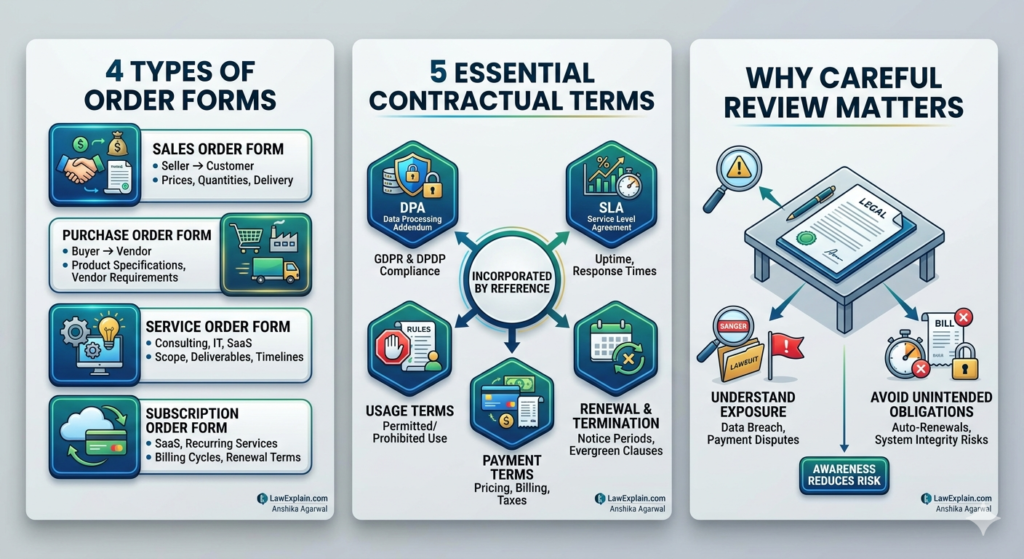
Key Contractual Terms Often Found in Order Forms
Order Forms frequently reference or incorporate additional contractual terms that have significant legal and operational impact. These may not always be spelled out explicitly within the form but are just as binding:
- Data Processing Addendum (DPA)
In transactions involving personal data, particularly in technology and SaaS agreements, a DPA governs how data is collected, processed, and protected. It ensures compliance with data privacy laws such as the GDPR or the DPDP Act, safeguarding both parties from legal risks related to data misuse. - Service Level Agreements (SLA)
SLAs set forth the expected performance standards from the service provider, such as uptime guarantees, response times, and support obligations. They also define remedies for service failures, for example, service credits or penalties, thereby protecting the client’s interests. - Usage Terms or Acceptable Use Policy
These terms outline what constitutes permissible and prohibited use of a product or service. They are essential for managing risks related to misuse, unlawful activities, or actions that could harm system integrity or other users. - Payment and Billing Terms
Detailed payment terms cover pricing structures, billing schedules, applicable taxes, and consequences of late payments. In subscription models, these terms govern recurring billing processes and ensure clarity on financial commitments. - Renewal and Termination Clauses
These provisions govern the duration of the agreement, automatic renewal mechanisms (often called evergreen clauses), and the notice periods required to terminate or cancel the contract before the next billing cycle. Understanding these terms helps avoid unintended contract extensions or penalties.
Why Careful Review Matters
Because Order Forms are typically concise and signed quickly, it is tempting to overlook the additional terms incorporated by reference. However, these embedded terms can carry significant legal and financial consequences. Failure to thoroughly review the entire contractual package including referenced annexes or policies can lead to unexpected obligations related to data protection, service quality, payments, or contract renewals.
Conclusion: More Than Just a Transactional Document
Order Forms serve as a gateway to binding commercial agreements. Recognizing the different types of Order Forms and understanding the key terms embedded within or referenced by them empowers businesses and legal professionals to manage contracts more effectively. A thoughtful, informed review process reduces risk, clarifies expectations, and aligns contractual obligations with commercial goals.
Ultimately, treating Order Forms as integral parts of a broader contractual framework—not just simple administrative forms—helps build stronger, clearer business relationships.
For further discussion or inquiries, feel free to connect with me on LinkedIn
For basic knowledge about Order Forms, please refer to this resource
To learn more about contracts and explore freelance work opportunities, visit my website

I work in the corporate and technology law space, with hands-on experience in drafting and reviewing commercial agreements, supporting compliance functions, and advising on legal issues faced by startups and growing businesses. My work has involved contracts, data protection, regulatory research, and legal support for technology-driven organizations.
I created this platform with a simple belief: law should be understandable, not intimidating. Founders, professionals, and non-lawyers often interact with legal documents without truly understanding them. My aim is to break down legal concepts, clauses, and terminology into clear, practical explanations that help people make informed decisions.
This space focuses on explaining law in plain language, especially areas like contracts, legal English, compliance basics, and everyday legal risks faced by businesses. The goal is not to replace professional advice, but to make legal knowledge accessible and actionable.
Through this platform, I also collaborate with startups, founders, and professionals on contract review, legal documentation support, and compliance-related work.